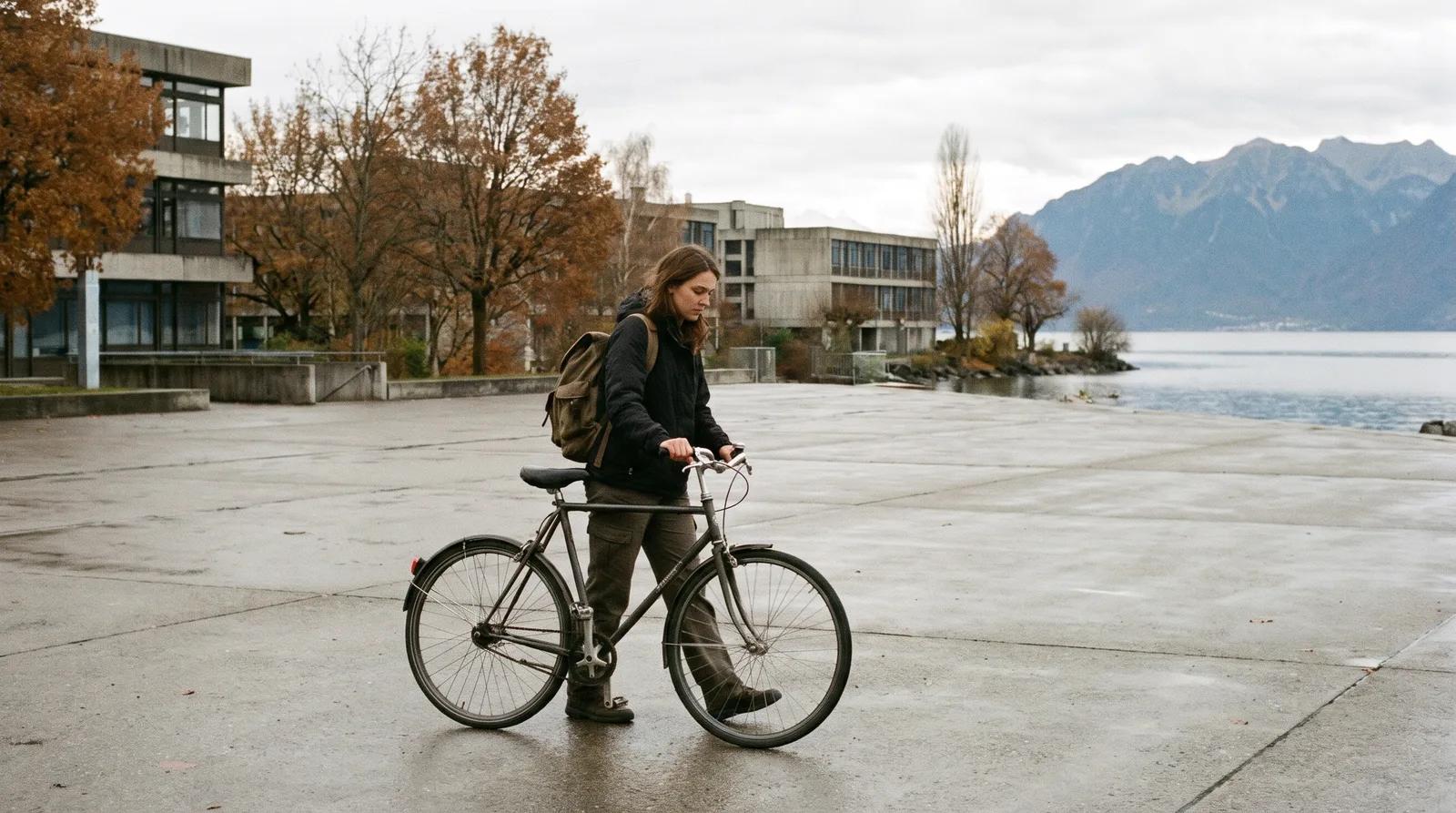
A non-EU student enrolled at a Swiss higher education institution can work up to 15 hours a week during the semester, no earlier than six months after the start of their studies, with an authorisation. After graduation, the law gives them six months to find a job, which must be of overriding scientific or economic interest.
You are doing your master's in Lausanne, Geneva or Neuchâtel, you have a small job on the side, and the end of your studies is approaching. The question becomes concrete: how do you move from this job to a real position, and with which permit? The rules differ a lot depending on your nationality. This guide is first for students from outside the European Union (EU) and the European Free Trade Association (EFTA), for whom timing matters most.
How many hours can an international student work in Switzerland?
A non-EU student enrolled at a Swiss higher education institution can work up to 15 hours a week outside the holidays, under article 38 of the Ordinance on Admission, Period of Stay and Employment (OASA). This work is possible no earlier than six months after the start of the programme, and it must be authorised.
Article 38 of the ordinance sets four conditions: the institution's management certifies that the activity is compatible with the programme and does not delay its completion, working time does not exceed 15 hours a week outside the holidays, there is a request from an employer, and pay and working conditions are met.
During the holidays, the limit varies by canton. The canton of Fribourg allows full-time work in June, July and August if the student has no classes. The canton of Geneva sets a maximum of 40 hours a week during the holidays.
| Period | Rule for a non-EU student | Source |
|---|---|---|
| First six months of studies | No side job | Article 38 of the ordinance (OASA) |
| Semester | 15 hours a week at most | Article 38 of the ordinance (OASA) |
| Holidays | More, depending on the canton (40 hours in Geneva, full time in summer in Fribourg) | Cantonal pages |
| Mandatory internship | Possible if it does not exceed half of the total length of the programme | Article 39 of the ordinance (OASA) |
Who applies for the authorisation for a student job?
The authorisation for a student job is requested from the competent cantonal office before you start working, and the procedure varies by canton. In Geneva, the student files the application with a form signed by both the student and the employer. In Fribourg, the employer sends the file to the cantonal office in charge of foreign workers.
The canton of Geneva's page on students' side jobs requires, among other things, a letter of agreement from the institution and states that you must wait for the decision before starting. The canton of Fribourg's page lists a copy of the residence permit, a form, a copy of the contract and the transcript of study credits.
In both cases, the principle is the same: no work before the authorisation. The Foreign Nationals Act requires an authorisation for any gainful activity by a foreign national, whatever the length of stay.
What happens to your permit after graduation?
After graduating from a Swiss higher education institution, a non-EU student is admitted for six months from the end of their programme to find a job, under article 21 of the Federal Act on Foreign Nationals and Integration (FNIA). The job they find must be of overriding scientific or economic interest. The clock starts at the end of the programme.
Article 21 of the Foreign Nationals Act also provides that such a graduate can be admitted without the employer having to prove that nobody suitable was found in Switzerland or the EU, whereas this priority rule normally applies to third-country nationals.
According to the canton of Vaud's page, economic interest notably covers a job linked to the studies, in a sector with a proven need for workers. The other admission conditions still apply.
How do you apply for the six-month job search permit?
To look for a job after your studies, you apply for a short-term residence permit from the cantonal migration office, before the end of your programme. In Geneva, this L permit is valid for six months, cannot be renewed, and the application must be filed no later than fifteen days before the end of your studies.
The canton of Geneva's page on the job search permit also sets out the conditions:
- Who can apply: non-EU and non-EFTA students who have completed their programme at a recognised or accredited higher education institution. Postdoctoral researchers are not covered.
- The documents: proof of financial means covering six months and proof of accommodation.
- Working during this permit: a side job linked to the job search can be authorised, up to 15 hours a week, with prior authorisation.
These are Geneva's rules. In another canton, check the procedure with the cantonal migration office, as deadlines and documents may vary.
How do you turn a student job into a first job?
To turn a student job into a first job, start looking during your final year, not after graduation: six months go by quickly. Target roles linked to your studies, approach employers who already know you, and present your student job, internship and master's thesis as real experience on your CV.
A few concrete options:
- Your current employer. If your student job is linked to your studies, ask whether there could be a position after graduation.
- Your internship and thesis. An internship or a master's thesis done with a company can be your best argument. Highlight it on your CV, with concrete results.
- Speculative applications. They let you approach companies that have published no job ad. Our speculative application method helps you target them.
- Your network. Professors, alumni, your institution's career events: our guide to the professional network in Switzerland explains how to go about it.
For a first CV, our article on the Swiss CV gives the expected format, and the one on finding a job without experience the right reflexes. State your residence status and the end date of your studies clearly: the recruiter needs to know right away whether a permit procedure is needed.
This is where candidat.app can help: the tool tailors your CV and cover letter to each posting from your real background, studies, internship and student job included, without inventing anything. You can send more targeted applications during those six months.
What about students from the European Union?
For a student from the European Union or EFTA, the rules are simpler thanks to the agreement on the free movement of persons. After your studies, a valid employment contract is enough to obtain a permit. During your studies, check with the canton: Geneva also applies the 15-hour weekly limit to EU and EFTA students.
According to the State Secretariat for Migration (SEM), an EU or EFTA national needs a valid employment contract to work in Switzerland, and receives a short-term permit or a B permit depending on the length of the job. For a third-country national, the employer applies for the authorisation, and the number of permits is limited.
The permits themselves are detailed in our guide to Swiss work permits, and the situation of non-Europeans in our article on working in Switzerland from outside the EU.
In summary
During your studies, a non-EU student can work up to 15 hours a week, no earlier than six months after the start of the programme, with an authorisation requested before starting. During the holidays, the limit depends on the canton. After a degree from a Swiss higher education institution, the law gives them six months to find a job of overriding scientific or economic interest. Start looking during your final year and file your permit application on time.
FAQ
Can an international student work more than 15 hours a week in Switzerland?
During the semester, no: the federal ordinance limits a non-EU student's side job to 15 hours a week outside the holidays. During the holidays, more is possible depending on the canton, for example 40 hours a week in Geneva or full time in summer in Fribourg.
How long can you stay in Switzerland after your studies to look for work?
A foreign national with a degree from a Swiss higher education institution is admitted for six months from the end of their programme to find a job, under the Federal Act on Foreign Nationals and Integration. In Geneva, this short-term permit cannot be renewed.
When should you apply for the job search permit after your studies?
Before the end of your programme. In Geneva, the application must be filed no later than fifteen days before the end of your studies, with proof of financial means for six months and of accommodation. In other cantons, check the deadline with the migration office.
Can you start a student job as soon as you arrive in Switzerland?
Not as a non-EU student enrolled at a higher education institution. A side job is only possible no earlier than six months after the start of the programme, and only once the cantonal authorisation has been granted. A mandatory internship in the curriculum follows other rules.
Which job lets you stay in Switzerland after graduation?
A job of overriding scientific or economic interest, according to the law. The canton of Vaud notably cites a job linked to the studies in a sector with a proven need for workers. The other admission conditions, such as the usual pay conditions for the place and sector, still apply.
